What makes a community thrive?
It’s a question we return to often at the Jamestown Farmers Market. We talk about access to fresh food, supporting local farmers, strengthening our local economy, and creating opportunities for neighbors to connect. But at a recent communications training, Jessica Frederick, vice chair of our Advisory Council, offered a beautiful metaphor that brought all these conversations together.
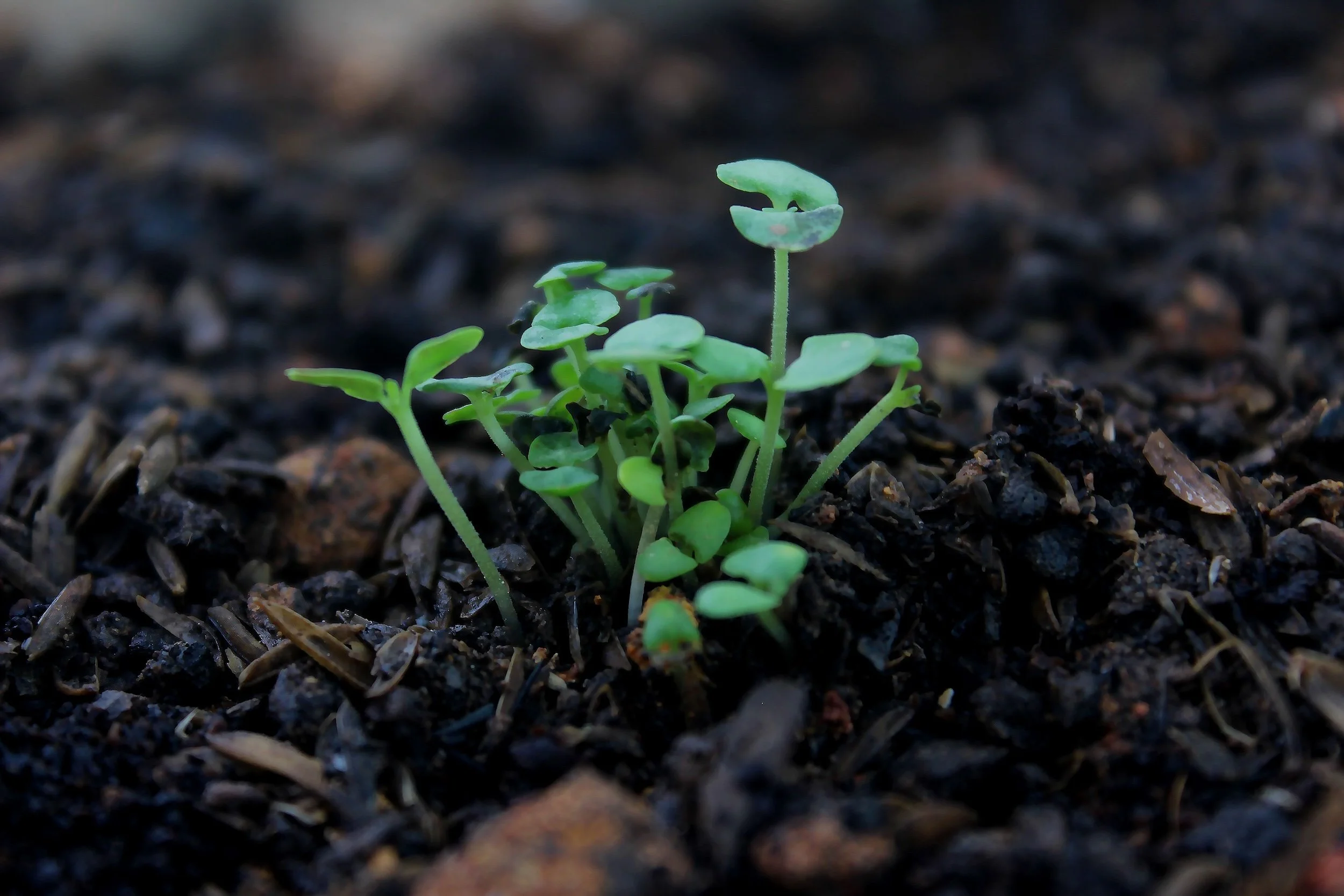
It all begins with good soil.
Jessica, a former farmer, reminded us that healthy soil is more than dirt. It is a living ecosystem, filled with organisms, nutrients, and relationships that make growth possible. And good soil doesn’t happen overnight. It must be cultivated, nourished, protected, and given time to flourish. The same is true of community.
The Danger of Efficiency
We live in a world that prizes efficiency. We want things faster, cheaper, and more convenient. We measure success by how much we produce, how quickly we accomplish our goals, and how efficiently we use our resources.
Efficiency has its place. But as Jessica observed, farmers know that when efficiency becomes the only measure of success, something important can be lost.
Agriculture focused exclusively on maximizing production can lead to depleted soil, monocultures, and diminished biodiversity. A field might produce an impressive harvest today while quietly losing its capacity to sustain life tomorrow. Communities can face a similar danger.
When we measure success only by economic output, attendance figures, or the number of programs we operate, we risk overlooking the relationships that make a community healthy. We can become very good at delivering services without ever really knowing the people we serve. We can build efficient systems while allowing the soil of belonging to grow thin. And we can accomplish a great deal without necessarily creating a place where people feel they belong.
Cultivating Something Different
At the Jamestown Farmers Market, we believe there is another way. Walk through the market on a Saturday morning and you’ll discover something that cannot be measured simply by counting transactions.
A farmer remembers a customer’s name. A child carefully chooses a pumpkin, and the grower helps her carry it home. Neighbors who might otherwise never meet stop to talk. Someone discovers a vegetable they’ve never cooked before and learns how to prepare it from the person who grew it.
These moments may seem small, but they are the living organisms of a healthy community.
They create trust. They nurture generosity. They help us recognize one another not merely as consumers, vendors, or recipients of services, but as neighbors. And that recognition changes things.
During our recent training, Jessica participant described bringing her young daughter, Penelope, to the market. Penelope found the perfect pumpkin and promptly sat on it, having decided that this was the one. The grower helped the family load it into their cart and even gave Penelope another tiny pumpkin.
It was a simple gesture. But in that encounter, a child was learning something about generosity, kindness, and belonging. She wasn’t just buying a pumpkin. She was discovering what community feels like.
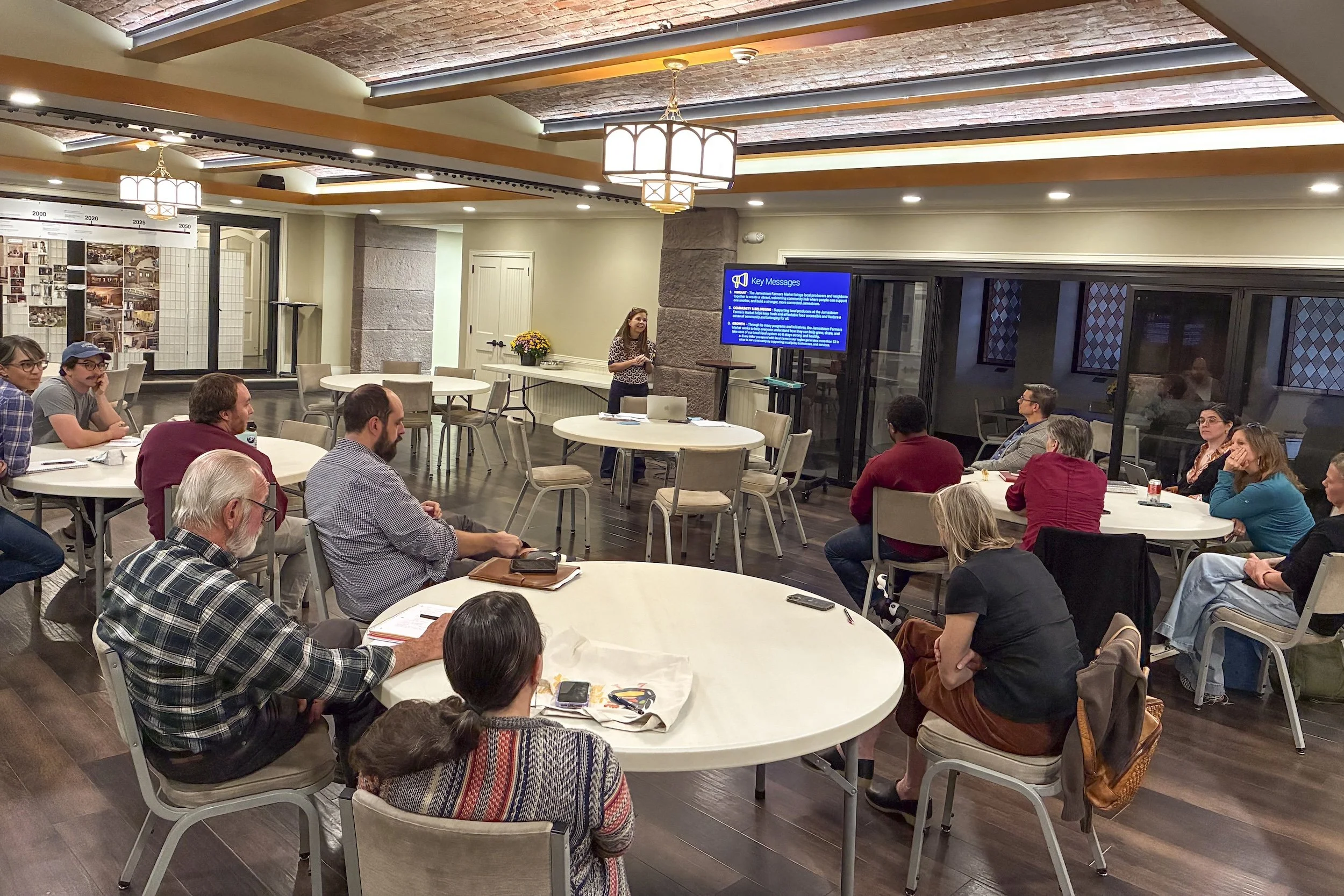
Community engagement committee members at a recent training. Photo courtesy Alan Gustafson
Diversity Makes Us Stronger
Healthy soil thrives through diversity. Different organisms contribute different things, creating a living system that is more resilient because of their interdependence. Healthy communities work the same way.
Our market brings together farmers, artisans, families, seniors, young people, longtime residents, and newcomers. Some people come looking for fresh vegetables. Others come for handmade goods, prepared foods, music, friendship, or simply the chance to be somewhere welcoming.
Some shop with SNAP benefits. Others support the market through donations, volunteering, or purchasing directly from local producers. Each person brings something different. And each contributes to the richness of the whole.
This is why the market’s work extends beyond its weekly gathering. Through food access programs, educational initiatives, community partnerships, and efforts to strengthen our regional food system, we are cultivating connections that reach across neighborhoods and generations.
The goal is not simply to move more food. The goal is to create a community in which more people can flourish.
The Slow Work of Belonging
Perhaps the most important part of Jessica’s metaphor is that cultivating healthy soil takes time. In a time when most people yearn for a time with less vitriolic political divides, the Market fosters a safe place of common ground.
You cannot rush the development of a living ecosystem. You can create the conditions for growth, but much of the work happens quietly, beneath the surface. Community-building is much the same. Trust develops through repeated encounters. Belonging grows when people are remembered, welcomed, and invited to participate. Relationships deepen when we take the time to listen to one another’s stories. This is slow work.
It doesn’t always fit neatly into a grant report or a spreadsheet. Its impact can be difficult to quantify. And sometimes it requires choosing relationships over efficiency. But the results are profound.
When people know one another, they are more likely to support one another. When we know the people who grow our food, we begin to care differently about the land and the local economy. When people feel that they belong, they become invested in the well-being of the entire community. What begins as a simple trip to the farmers market can become an act of community-building.
Growing a Stronger Jamestown
At the Jamestown Farmers Market, we often talk about being a vibrant community hub, fostering belonging, and helping our local food system grow. Jessica’s metaphor reminds us that these aren’t three separate goals. They are part of the same living ecosystem.
A vibrant market creates opportunities for connection. Those connections foster belonging. And belonging creates the conditions for a stronger, more resilient community. Our farmers understand that the health of tomorrow’s harvest depends on how we care for the soil today. We believe the same is true of Jamestown.
Every conversation, every welcoming gesture, every relationship between a producer and a neighbor is part of cultivating the community we hope to become. We won’t build that community through efficiency alone. We’ll build it through patience, generosity, diversity, and the steady work of showing up for one another.
So the next time you visit the Jamestown Farmers Market, come for the vegetables, the flowers, the handmade goods, or the fresh bread. But stay for the conversations.
Learn a farmer’s name. Meet someone new. Bring a neighbor. Invite someone who has never been before.
Because the most important thing we’re growing together isn’t something you’ll find on a market table.
It’s the community itself. And that begins with good soil.