A guest essay from Luke Fodor, rector at St. Luke’s Episcopal Church and JFM’s biggest cheerleader.
This past Saturday, the Jamestown Farmers Market opened its summer season in its new location with a renewed sense of excitement. Seeing so many familiar faces volunteering, shopping, and reconnecting with neighbors warmed my heart.
After buying strawberries, greens, milk, and eggs, I wandered over to the Sprouts Tent, where children receive "Sprouts Bucks" to spend on fresh fruits and vegetables of their own choosing. It is one of those deceptively simple programs that accomplishes several things at once: it introduces children to healthy food, encourages independence, and connects families to the rhythms of a local food system.
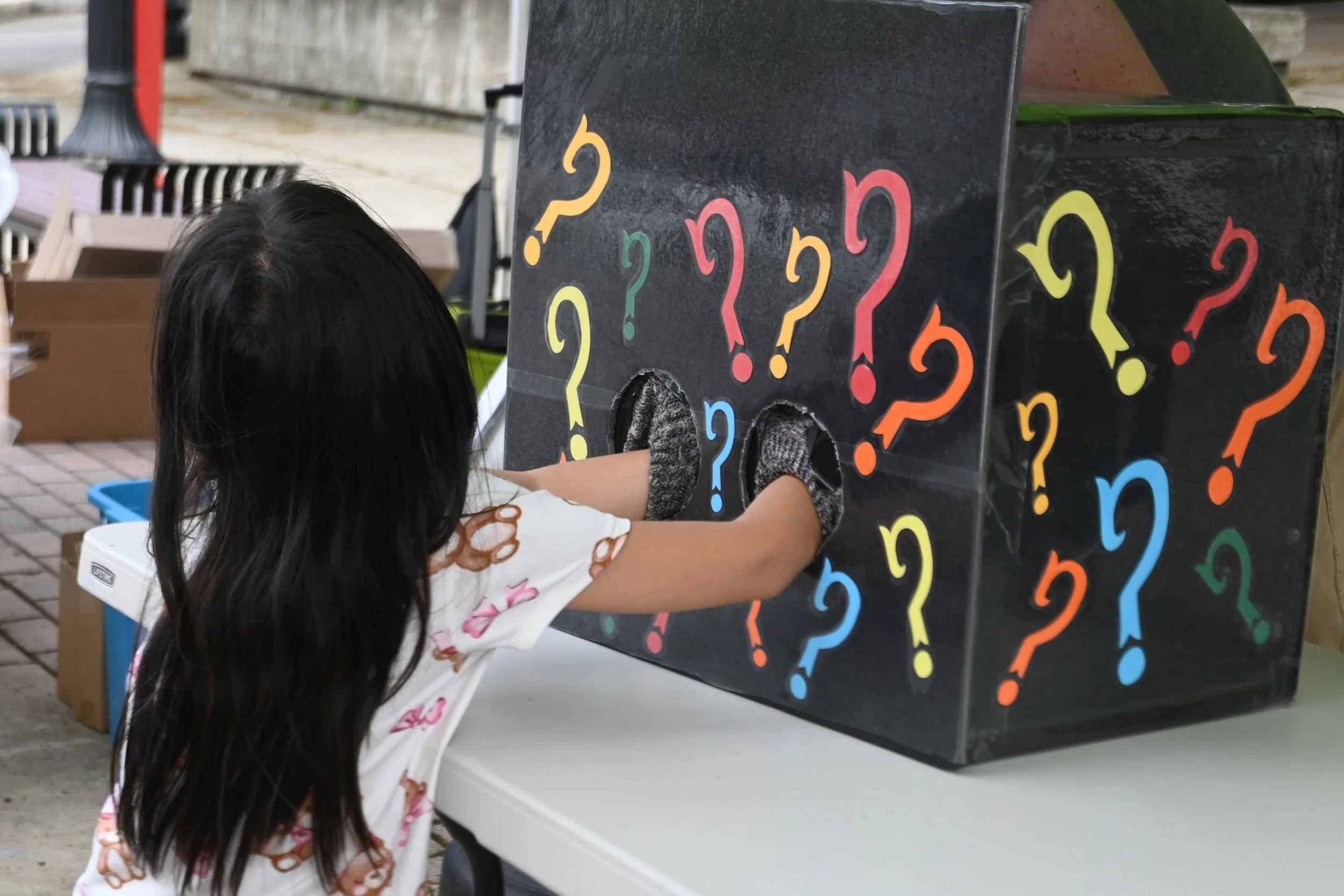
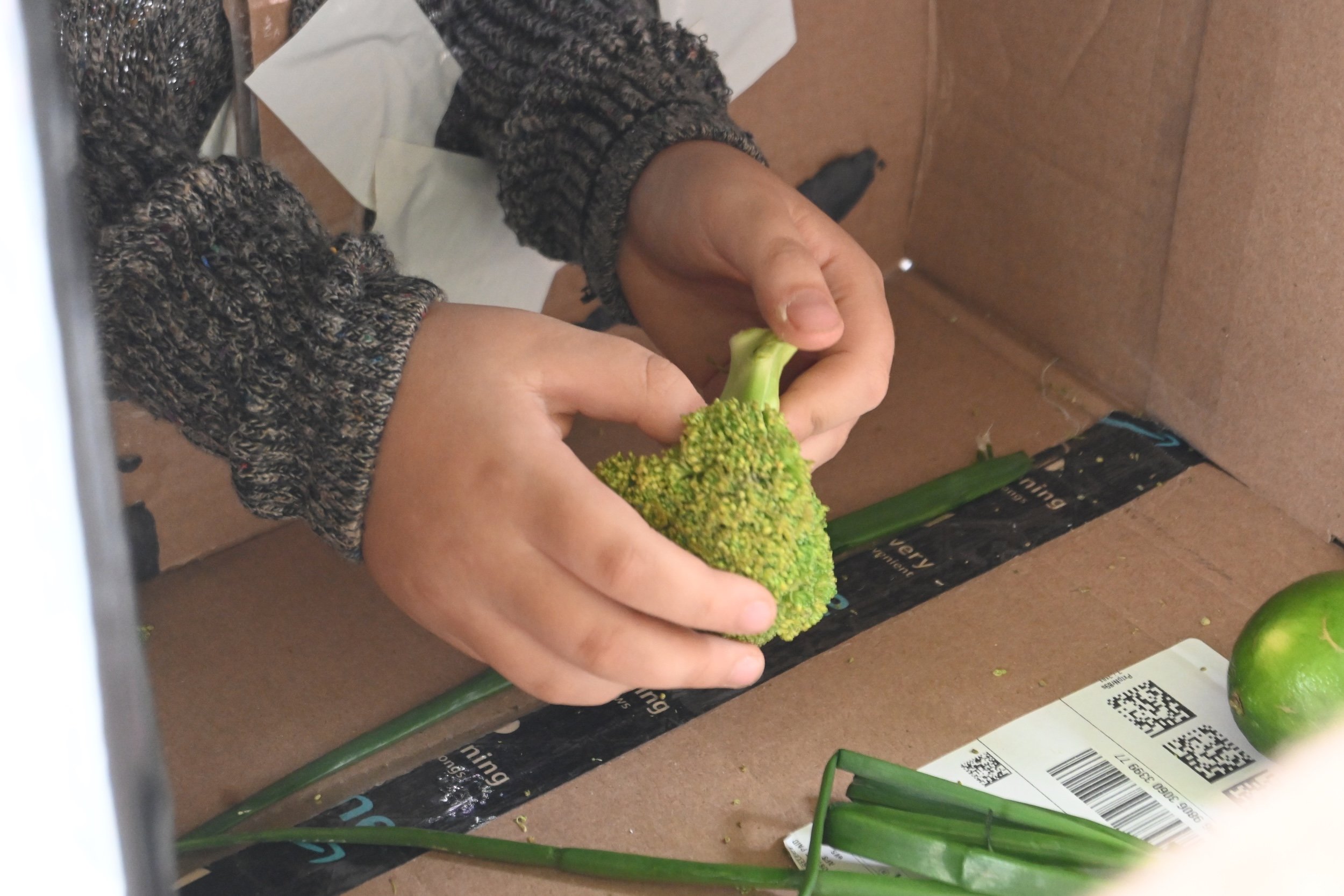
The market staff had set up a mystery box decorated with question marks, originally designed by volunteer Joan Eppeheimer. Children would place their hands through two small openings while staff members slipped a fruit or vegetable into their hands. The challenge was to identify what they were holding without being able to see it.
Some recognized strawberries or broccoli immediately. Others struggled with limes or spring onions. Correct answers were celebrated, but everyone received the same reward. The point was not perfection. The point was participation.
As I watched, I found myself thinking that much of life feels exactly like that mystery box.
Most of us spend our days holding experiences we cannot fully identify. A new opportunity appears unexpectedly. A relationship begins to change. A job comes to an end. A diagnosis arrives. A loss reshapes the landscape of our lives. We know something is there. We can feel its weight and texture. We have clues. Yet we often cannot immediately name what it means.
Modern life encourages us to believe that every uncertainty is simply a problem waiting to be solved. We are taught to gather more data, create better plans, and find the right expert to provide the answer. There is wisdom in those practices, but there is also a danger. We can become so focused on certainty that we forget how much of life—and community—is built through participation rather than control.
Community organizer and author Peter Block has spent decades reminding us that healthy communities are not built primarily by expertise, programs, or institutions. They are built by citizens who choose to participate in the life of a place. Real transformation begins when people stop asking, "Who is going to fix this?" and start asking, "How can I contribute?"
A farmers market is a beautiful example of this principle at work.
On the surface, it is a place to buy food. But beneath that transaction lies something more important. Farmers share the fruits of their labor. Neighbors encounter one another. Volunteers give their time. Children learn where food comes from. Local organizations build relationships with families. A community gathers not because someone has solved every problem, but because people continue to show up and participate.
Peter Block argues that belonging is created when people become co-creators rather than consumers. We become invested in a place when we contribute to it. We discover meaning not by standing outside and analyzing, but by stepping inside and participating.
Perhaps that is why I found the mystery box so compelling.
The children were not expected to know everything before they participated. They learned by reaching in. By risking being wrong. By remaining curious. By engaging with something they did not yet fully understand.
Adults are often less willing to do that.
We prefer certainty. We prefer expertise. We prefer the safety of observation. Yet communities grow when people are willing to enter the mystery together, bringing what they have, learning as they go, and trusting that participation itself creates possibilities that could never be engineered from the outside.
The children at the Sprouts Tent taught a quiet lesson this past week.
Whether they guessed correctly or incorrectly, everyone was welcomed into the game. Everyone received the reward. Everyone left having learned something.
Perhaps that is how communities grow as well.
Not through perfection.
Not through certainty.
But through participation.